EXECUTIVE ASSURANCE GROUP (EAG)
Engagement Case Studies
Anonymized for confidentiality. Client and factory identities withheld per EAG engagement policy.
About These Case Studies
The following case studies describe real engagement scenarios drawn from EAG's on-ground work across Pakistan's export manufacturing sector. Client names, factory identities, and specific commercial details have been withheld in accordance with EAG's confidentiality policy.
They are shared to illustrate how EAG approaches risk identification, independent assessment, and practical problem resolution — and what that means in practice for international buyers and audit partners.
THE SITUATION
A European sportswear brand with an established sourcing base in Asia was evaluating Pakistan — specifically Sialkot — as a supplementary manufacturing destination for cut-and-sew performance apparel and team uniforms. They had received competitive pricing from two factories and were close to committing a first trial order.
Before placing the order, they engaged EAG to conduct an independent factory evaluation of both shortlisted suppliers.
WHAT EAG FOUND
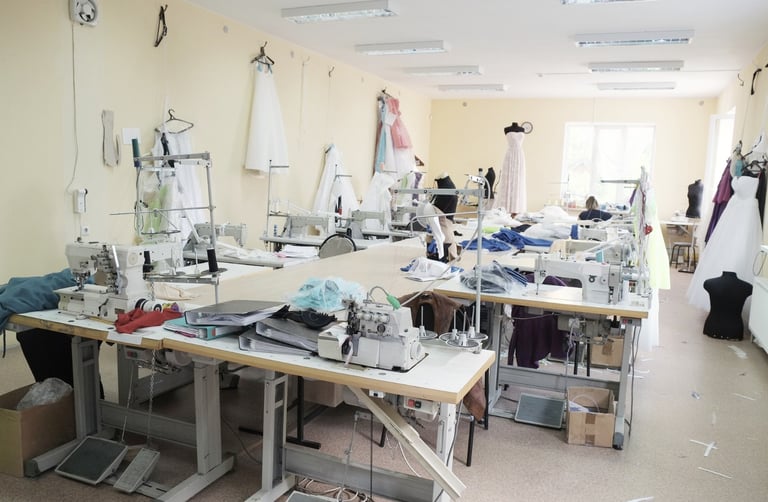
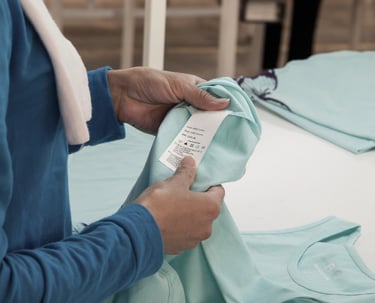
The first factory presented well — a clean facility, organized showroom, competent management communication, and an existing export client list. The evaluation, however, revealed a significant gap between presentation and production reality.
Machinery review identified that the factory's sublimation printing equipment was operating beyond its reliable service life, with no replacement budget planned. For a performance apparel order requiring consistent print quality across a bulk run, this represented a direct quality risk.
Workforce assessment revealed that the experienced operators responsible for the sample garments were senior staff assigned specifically for buyer visits — not the workers who would handle bulk production. This is a common pattern in Sialkot's mid-tier factories and one that is invisible without on-ground observation.
Costing logic review showed that the price offered was sustainable only at a fabric wastage assumption that was unrealistic for the technical specifications provided. The factory had priced to win — not to deliver.
The second factory presented more modestly but demonstrated genuine production depth, consistent workforce capability, and a costing structure that was slightly higher but commercially sound.
THE RECOMMENDATION
EAG provided the buyer with a clear, evidence-based evaluation report for both factories — with a specific recommendation to proceed with the second supplier, conditional on a pre-production meeting to align on technical specifications and a defined quality checkpoint schedule.
The report also identified three specific areas for the buyer to address contractually before order confirmation — delivery timeline buffer, approved fabric sourcing list, and inspection access rights during production.
nt choice for anyone dreaming of their own safe haven.
OUTCOME
— The buyer avoided committing a first order to a factory carrying significant quality and delivery risk.
— A structured engagement was initiated with the second factory under clearly defined terms.
— The pre-production meeting identified two specification ambiguities that were resolved before bulk production began.
— The order was delivered on time with no major quality non-conformities at final inspection.
— The buyer has since expanded sourcing from the same supplier under ongoing EAG oversight.
The evaluation gave us clarity we could not have gotten from a remote assessment or agent recommendation. The issues with the first factory would not have been visible until production was already underway.
— Sourcing Manager, European sportswear brand (identity withheld)
Case Study 1
Pre-Sourcing Factory Evaluation — Preventing a Costly Commitment
European sportswear brand | Sialkot, Pakistan | Factory evaluation & sourcing risk assessment
THE SITUATION
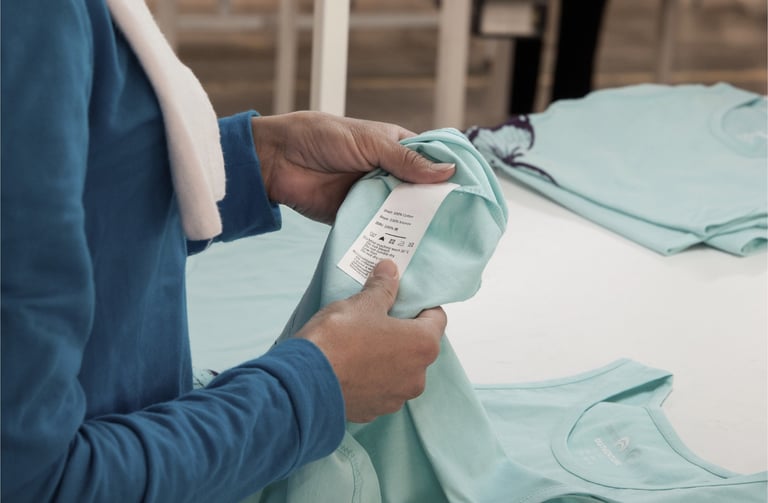
An international certification and audit partner engaged EAG to conduct an independent traceability assessment at a major Punjabi export factory supplying a globally recognised brand. The brand's compliance program required verified traceability from raw material origin through to finished goods — a requirement that had not been fully met in the factory's previous self-declaration.
The factory was a significant exporter with an established compliance history — and had passed previous social compliance audits without major findings. The traceability requirement was newer, more granular, and exposed structural gaps that standard CoC audits had not been designed to detect.
WHAT EAG FOUND
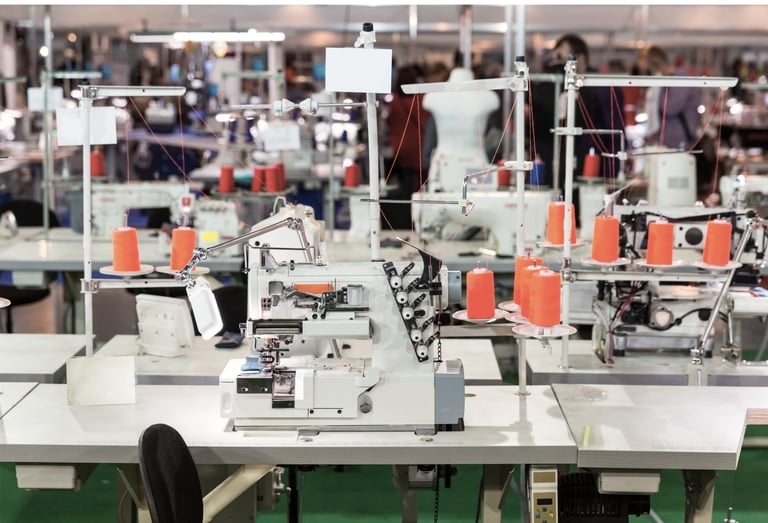
The factory's primary fabric was sourced through a local trader rather than directly from the mill — a common and commercially rational arrangement in Pakistan's textile supply chain, but one that broke the documentation chain required for brand-level traceability.
The trader had relationships with multiple mills and could not consistently guarantee single-origin sourcing for any given order. Fabric certificates on file were mill-issued but could not be definitively linked to the specific rolls used in the production lots under assessment.
Additionally, one specific finishing process — a specialist embroidery operation — was being subcontracted to a smaller unit that was not disclosed on the factory's approved subcontractor list. This unit had not been assessed against the brand's compliance requirements and was handling a component of finished goods destined for the brand's retail market.
Neither finding reflected dishonest intent on the factory's part. Both reflected structural practices that are routine in the local supply chain and that the factory had not recognized as non-compliant with the brand's specific traceability expectations.
THE ACTION
EAG produced a structured assessment report documenting both non-conformities with full evidence — fabric certificate cross-referencing, production records, subcontractor identification, and photographic documentation of the embroidery unit.
A corrective action plan was developed in consultation with the factory, covering direct mill sourcing for future orders, subcontractor disclosure and compliance assessment, and documentation protocols that would support future traceability verification.
EAG conducted a follow-up verification visit three months later, confirming that the direct mill sourcing relationship had been established, the subcontractor had been formally declared and assessed, and the documentation system had been updated to support the required traceability chain.
OUTCOME
— Both non-conformities were fully resolved within the agreed corrective action timeline.
— The factory achieved compliant traceability documentation for subsequent orders.
— The brand's compliance program received a verified, evidence-based closure report.
— The subcontractor unit was formally assessed and brought within the compliance scope.
— The factory strengthened its documentation practices — reducing traceability risk for all future brand engagements.
The findings were clearly documented and practically framed. The factory understood what was required and why — and the corrective action process was constructive rather than adversarial. That approach makes a significant difference in Pakistan's manufacturing environment.
— Programme Manager, International Audit Partner (identity withheld)
Case Study 2
Traceability Audit — Resolving a Multi-Tier Supply Chain Transparency Gap
International brand compliance program | Punjab, Pakistan | Traceability assessment & corrective action verification


Specialized technical oversight and risk mitigation for Pakistan's premier textile, technical wear, and soft goods sectors.
assurance@eagsourcing.com
+92-334-861-5253
© 2026. Executive Assurance Group. All rights reserved.
Our Expertise
Global Presence
Stay Informed
Headquarters:
Askari 1, Cantt
Sialkot, Pakistan
Phone:
E Mail:
H No: 144
Supporting international buyers and audit partners across Europe, North America, Australia, and Asia sourcing from Pakistan